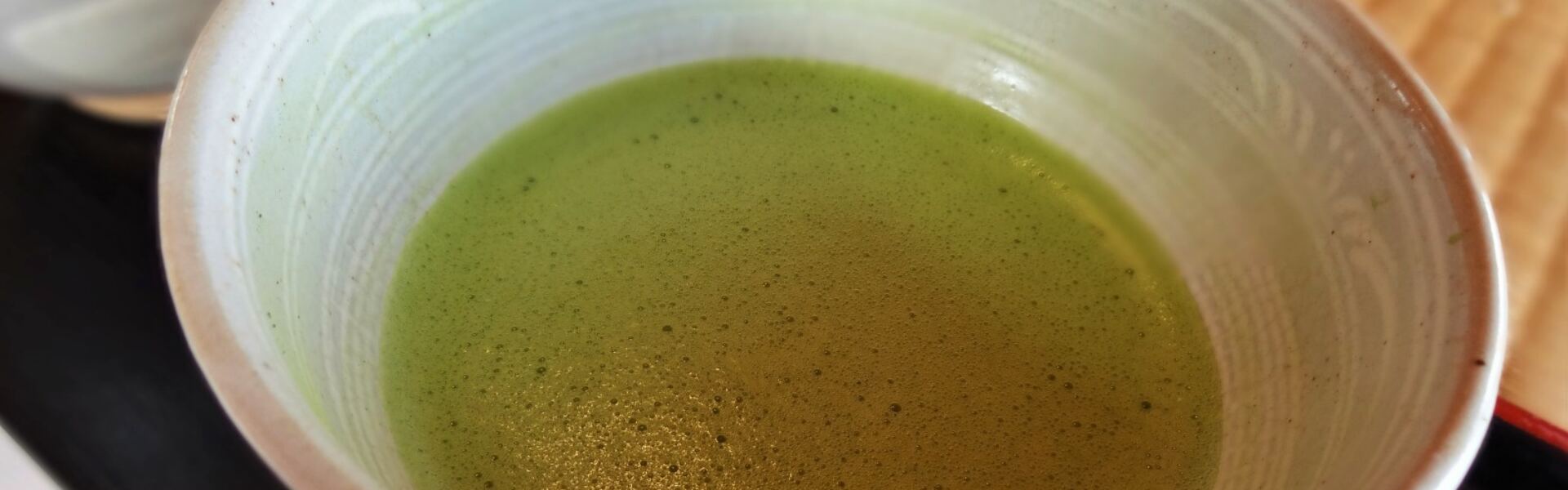
A ritual is a fixed sequence of actions performed with care, whose meaning lies less in what each step achieves than in the form itself. This article looks at why rituals work, what the research supports, what has not held up, and why form can help even people who believe in nothing in particular.
Tell a group of people that in a few minutes they will have to give a public speech, then hand each of them an ordinary object and ask them to clean it. Something curious happens to their movements. In an experiment published in Current Biology in 2015, Martin Lang, Dimitris Xygalatas and colleagues used motion tracking to compare anxious participants with calmer ones doing the very same task. The anxious group cleaned in a more repetitive, more rigid, more redundant way: the same gestures, again and again, beyond what the object needed (Lang et al., 2015).
No one had told them to perform a ritual. Their bodies went there on their own.
That small finding opens a large question. Human beings in every culture surround births, deaths, meals, passages and beginnings with fixed sequences of gestures that, taken one by one, do not cause anything. Why do we keep doing them? And why do they seem to help people who do not share the beliefs that once gave them meaning? This is the question of why rituals work, and the answer is more interesting, and more modest, than many popular accounts suggest.
In this article
- Definitions: ritual, habit, routine
- What the research says
- Anatomy of a ritual that helps: six elements
- The honest twist: a famous study that did not survive
- Why form works without belief: four hypotheses
- The risks, stated honestly
- Form without decoration: how Ad Unum works
- Six questions for any ritual
- Conclusion
- FAQ
- Sources
Definitions: ritual, habit, routine
The word “ritual” is used loosely, for anything from a morning coffee to a coronation. Clear definitions keep the discussion honest. Each one below is self-contained.
Ritual: a predefined sequence of actions, often repeated, characterised by formality and by the fact that its steps are not directly connected to a practical outcome. In the psychological literature, rituals are described as rigid, repetitive and “causally opaque” (Hobson et al., 2018).
Habit: a behaviour triggered automatically by a context, learned through repetition and reward, that runs with little conscious attention. Habits serve a goal; rituals do not need to (Wood & Rünger, 2016).
Routine: an ordered set of practical actions repeated for efficiency, such as a checklist before a flight. A routine becomes ritual-like when people keep its form even where efficiency no longer requires it.
Causal opacity: the property of an action whose link to its effect cannot be seen. Lighting a candle on a birthday cake does not cause another year of life; the meaning is carried by the form, not by mechanics.
Ritual stance: the tendency, observed in children and adults, to interpret an action as meaningful and conventional, rather than practical, when its steps are opaque and repeated exactly (Kapitány & Nielsen, 2015).
Ad Unum: the educational and experiential approach of Reconnective Academy International, built around awareness and the idea of unity. Learn more on the Ad Unum page.
Ad Unum Experience: the experiential course of Reconnective Academy International, an educational path of awareness offered in groups. It is educational and not a treatment.
Ad Unum Energy Healing: the Academy’s course on energy practices for wellbeing and awareness, presented as complementary and never as a substitute for medical or psychological care. You can find the current dates on the courses page.
What the research says
For a long time rituals belonged to anthropology and theology. In the last fifteen years experimental psychology has started to study them in the laboratory, with all the advantages and limits that implies. The most useful map comes from a 2018 review in Personality and Social Psychology Review by Nicholas Hobson, Juliana Schroeder, Jane Risen, Dimitris Xygalatas and Michael Inzlicht. They propose that rituals act on three levels at once: they help regulate emotions, they help people reach performance-related goals, and they build social connection (Hobson et al., 2018).
Uncertainty and the urge to repeat
The cleaning experiment described at the beginning fits a wider pattern. When a situation is uncertain and cannot be controlled, people tend to produce more structured, more repetitive behaviour. The interpretation proposed by the authors is that a predictable sequence of actions gives the mind something it can control when the larger situation is out of reach. The ritual does not solve the speech; it gives the next five minutes a shape (Lang et al., 2015).
This is worth noticing because it reverses a common assumption. We often think of rituals as the product of belief: first we believe, then we act. Here the order seems to be the opposite. The body moves towards form first; the meaning can come later, or never.
Loss and grief
Michael Norton and Francesca Gino reported in 2014 that people who were asked to recall a ritual they had performed after a loss, or who performed a new ritual after a disappointment in the laboratory, reported less grief and a greater sense of control (Norton & Gino, 2014). Interestingly, many of the rituals people described were personal and private, not religious: playing a certain song, visiting a place, keeping an object.
The finding is plausible and consistent with what anthropologists have written for a century. It should still be read with caution, for a reason we will come to in the honest twist below.
Attention and savouring
A 2013 study in Psychological Science by Kathleen Vohs and colleagues asked participants to perform a short ritual before eating chocolate or carrots: unwrapping, breaking, following a set order. Those who performed the ritual reported enjoying the food more, and the effect seemed to depend on a delay between the ritual and consumption and on personal involvement (Vohs et al., 2013). The proposed mechanism is attention: a ritual slows the moment down and makes people more present to what follows.
Belonging
Rituals are also social technology. During the Thaipusam festival in Mauritius, Xygalatas and colleagues compared participants in a high-ordeal ritual with those in a low-ordeal ritual. Those who took part in the more demanding ritual, and those who watched it, later donated more money to a temple collection, and the more pain participants reported, the more they gave (Xygalatas et al., 2013). Shared effort and shared form seem to bind people together. We will see below that this power cuts both ways.
How we judge whether a ritual “works”
Cristine Legare and André Souza asked people in Brazil to rate the efficacy of traditional ritual remedies (simpatias) that varied in their features. People judged a ritual more effective when it had more repeated procedures, more steps, a specified time and religious elements, regardless of any plausible mechanism (Legare & Souza, 2012). Kapitány and Nielsen found a related effect: when an action is opaque and repeated exactly, observers stop asking what it is for and start treating it as meaningful (Kapitány & Nielsen, 2015).
These two studies are important for anyone who teaches or guides others. They show that our minds attribute power to form itself: number of steps, precision, timing. That intuition can support people. It can also be exploited.
Ritual is not habit
Wendy Wood and Dennis Rünger’s review of habit research describes habits as context-response associations that run automatically and become insensitive to their outcomes (Wood & Rünger, 2016). A ritual shares the repetition but differs in one key point: it asks for attention rather than replacing it. Brushing your teeth on autopilot is a habit. Pausing before a meal to look at the table is closer to a ritual. The difference is not in the gesture; it is in where the mind is while the gesture happens.
An old idea, seen from philosophy
The thought that form shapes the person who performs it is far older than psychology. In the Confucian tradition, li, often translated as “ritual propriety”, covers ceremonies and everyday courtesy alike, and is understood as a way of training feeling and character through practice rather than through doctrine (Stanford Encyclopedia of Philosophy, “Confucius”). You do not first become respectful and then bow; the bow, repeated with care, helps you become respectful. Contemporary research does not prove this view, but it is remarkably compatible with it.
Anatomy of a ritual that helps: six elements
Putting the findings together, it is possible to describe what most helpful rituals have in common. These are not rules for inventing ceremonies; they are a lens for recognising what is happening when a form supports people.
- A clear beginning. Something marks the threshold: a word, a change of posture, a moment of stillness. The mind learns that “now” is different from “before”. This connects to the emotion-regulation level described by Hobson and colleagues.
- A fixed sequence. The steps happen in the same order each time. Predictability lowers the load of deciding, which is exactly what anxious minds seek (Lang et al., 2015).
- Form valued for itself. At least some steps are not justified by their practical result. This causal opacity is what activates the ritual stance and turns an action into an act (Kapitány & Nielsen, 2015).
- Attention on the present step. Unlike a habit, a ritual invites people to be where they are. Here lies the plausible mechanism behind the savouring findings (Vohs et al., 2013).
- Repetition over time. A ritual acquires weight when it returns. Each repetition carries the memory of the previous ones, which is why a simple gesture can become dense with meaning across years.
- A clear end, often shared. Something marks the exit and returns people to ordinary life. When others are present, the end is witnessed, and the experience becomes part of a common story (Xygalatas et al., 2013).
Notice what is absent from this list: special objects, specific words, belief in a hidden mechanism. They can be part of a ritual. They do not seem to be what makes it help.
The honest twist: a famous study that did not survive
Popular articles on rituals often cite a study in which participants performed a short, arbitrary ritual before singing in front of strangers or solving a maths task, and reportedly felt less anxious and performed better. It was published in 2016 in Organizational Behavior and Human Decision Processes under the title “Don’t stop believing: Rituals improve performance by decreasing anxiety”. In 2024 the journal retracted it (retraction notice, OBHDP, 2024).
That does not mean rituals do not reduce anxiety. It means one of the most quoted pieces of evidence for that claim can no longer be used, and that several related findings come from a small cluster of laboratories, with modest samples, that have not yet been widely replicated. The grief and savouring studies cited above have not been retracted, but they belong to the same young literature and deserve the same prudence.
What remains solid is more modest and, perhaps, more useful:
- anxiety and uncertainty push people towards repetitive, structured behaviour (Lang et al., 2015);
- people attribute efficacy to form itself: steps, repetition, timing (Legare & Souza, 2012);
- shared, demanding rituals are associated with stronger group bonds (Xygalatas et al., 2013);
- the theoretical framework of emotion regulation, goal states and social connection is coherent and testable (Hobson et al., 2018).
A side note on belief. In 2010, Ted Kaptchuk and colleagues published a small randomised trial in which patients with irritable bowel syndrome were openly told they were receiving placebo pills, and still reported improvement compared with no treatment (Kaptchuk et al., 2010). It is one study, in one condition, and it is not an argument for replacing any care. It is mentioned here only because it adds to a recurring theme: the structured act of doing something with care may matter even when no one is asked to believe in it.
Saying all this openly is not a weakness of the argument. It is the argument. A practice that respects people tells them what is known, what is suggestive and what has fallen.
Why form works without belief: four hypotheses
Many people today feel distant from the traditions that gave rituals their meaning, and still find that some forms help them. Why? Here are four hypotheses, from the most mechanical to the most relational. They are not mutually exclusive.
- Structure reduces uncertainty. A fixed sequence is a small island of predictability. The mind does not need to believe anything about it; it only needs to know what comes next. This is the most direct reading of the anxiety findings.
- Attention gets a task. A ritual gives attention a precise object: this step, then the next. Rumination finds less space when the present has a shape. This is the plausible mechanism behind the savouring studies.
- A boundary marks before and after. Grief, transitions and beginnings are hard partly because they have no edges. A ritual draws an edge. Whether or not one believes in anything beyond, the line itself helps people say “that was then, this is now”.
- Others carry part of the weight. When a form is shared, the individual is no longer alone with the moment. The group holds the structure, and belonging does part of the work. This is why collective rituals often feel stronger than private ones, and also why they can be misused.
None of these mechanisms requires faith. All of them require care: attention to the steps, respect for the person, honesty about what the form is for.
The risks, stated honestly
Form is powerful, and anything powerful can be misused. Here are the main risks, without drama.
Rigidity. A helpful ritual can turn into a rule that must never be broken. When missing a step causes distress, when the sequence keeps growing, when it occupies more and more time, it is no longer serving the person. Persistent, distressing repetitive behaviours deserve attention from a qualified professional; this article does not offer a diagnosis.
Ritual in place of care. A ritual can accompany a difficult moment. It does not replace medical or psychological care, and no ritual should be presented as if it could.
Power over the group. The research on shared rituals shows that common effort creates strong bonds. In a healthy context this means solidarity. In an unhealthy one, the same mechanism can make people loyal to a leader rather than to their own judgement. Demanding rituals, secret steps and escalating commitments deserve a careful look.
Magical attribution. As Legare and Souza showed, we tend to believe a ritual is more effective when it has more steps and more precise timing. A form can therefore look powerful simply because it is elaborate. Complexity is not evidence.
Exclusion. When a ritual is presented as “the right way”, those who cannot or will not follow it may feel wrong. A good form leaves room for people to take part in their own way, or not at all.
Form without decoration: how Ad Unum works
When people hear “energy practice”, many picture a ritual setting: incense, music, candles, crystals, a circle of chairs. Ad Unum makes a different choice, and the research above helps explain it.
We keep the elements of form that support people and leave out the decoration that can distract from the experience itself. In practice:
- A neutral room. No aromas, diffusers or incense, no background music of any kind, no candles, crystals or ritual objects in view. Silence, order, warm light and a comfortable temperature are enough.
- A clear beginning and a clear end. People know when the session starts, how it unfolds and when it ends. A session lasts at most 35 to 40 minutes.
- The same structure every time. Predictability is a form of respect: no surprises, no escalation, nothing added to impress.
- Nothing to believe. No one is asked to accept a doctrine before or during the experience. The practice is lived in wu wei, without the intention to make something happen.
- Questions afterwards. Reflection and questions come after the session, not during it. During the session there is nothing to evaluate.
- Freedom to take part in one’s own way. No one has to perform a gesture to belong. Anyone can simply be there.
This reflects the way the Academy approaches philosophy and personal growth: keep what helps, say what is known, and leave each person free. The idea of unity at the heart of Ad Unum does not need ceremony to be explored; it needs presence. If you are curious about the scientific background we draw on, our science page collects it, and the energy and healing page explains how we position our work as complementary to care.
Six questions for any ritual
Whether you design small rituals for yourself, take part in a group practice or lead one, these questions help keep form in the service of people.
- Do I know how it begins, how it unfolds and when it ends?
- Can I say what this form is for, in plain words, without promising results?
- Is there anything I am asked to believe in order to take part? Is that stated openly?
- If I skip a step or choose not to take part, what happens? Is that freedom real?
- Does the ritual grow over time, in cost, length or commitment? Who benefits from that growth?
- Does it leave me more present and more free, or more dependent on the person who leads it?
Conclusion
The anxious participants who cleaned an object over and over were not superstitious. They were human. Faced with uncertainty, the body reaches for form, and form, when it is clear and kind, gives people a place to stand.
That is the modest answer to the question of why rituals work. Not because steps have hidden powers, and not only because people believe in them, but because structure, attention, boundaries and belonging are real needs. A ritual can meet them. It can also exploit them. The difference lies in honesty: in saying what a form is for, what the evidence supports, what has not held up, and in leaving each person free to stay, to change, or to walk away.
Good form does not ask for faith. It asks for care.
FAQ
Why do rituals work?
Research suggests rituals help in three ways: they regulate emotions by giving structure to uncertain moments, they focus attention on the present step, and they strengthen social bonds when shared. These mechanisms do not require belief, although meaning can deepen their effect.
What is the difference between a ritual and a habit?
A habit is an automatic response to a context that serves a goal and runs with little attention. A ritual is a fixed sequence performed with attention, whose meaning lies in the form itself rather than in a practical result.
Do rituals really reduce anxiety?
Anxiety clearly pushes people towards repetitive, structured behaviour, and several studies suggest rituals can help regulate it. However, one widely cited study on rituals and performance anxiety was retracted in 2024, so the evidence should be considered promising but not settled.
Can rituals help if I am not religious?
Many of the rituals people describe in research are personal and secular: a song, a walk, a moment of stillness before a meal. The mechanisms proposed, such as structure, attention, boundaries and belonging, do not depend on religious belief.
When does a ritual become a problem?
When it becomes rigid and distressing to skip, when it keeps expanding, or when it is used to bind people to a leader or a group against their own judgement. Persistent distressing repetitive behaviours deserve the attention of a qualified professional.
Does Ad Unum use rituals?
Ad Unum keeps a clear, predictable structure, with a defined beginning, a session of at most 35 to 40 minutes and a clear end, in a neutral room without incense, music, candles or ritual objects. No belief is required to take part. Ad Unum is educational and experiential and does not replace medical or psychological care.
Sources
- Hobson, N. M., Schroeder, J., Risen, J. L., Xygalatas, D., & Inzlicht, M. (2018). The psychology of rituals: An integrative review and process-based framework. Personality and Social Psychology Review, 22(3), 260–284. https://doi.org/10.1177/1088868317734944
- Lang, M., Krátký, J., Shaver, J. H., Jerotijević, D., & Xygalatas, D. (2015). Effects of anxiety on spontaneous ritualized behavior. Current Biology, 25(14), 1892–1897. https://doi.org/10.1016/j.cub.2015.05.049
- Norton, M. I., & Gino, F. (2014). Rituals alleviate grieving for loved ones, lovers, and lotteries. Journal of Experimental Psychology: General, 143(1), 266–272. https://doi.org/10.1037/a0031772
- Vohs, K. D., Wang, Y., Gino, F., & Norton, M. I. (2013). Rituals enhance consumption. Psychological Science, 24(9), 1714–1721. https://doi.org/10.1177/0956797613478949
- Xygalatas, D., Mitkidis, P., Fischer, R., Reddish, P., Skewes, J., Geertz, A. W., Roepstorff, A., & Bulbulia, J. (2013). Extreme rituals promote prosociality. Psychological Science, 24(8), 1602–1605. https://doi.org/10.1177/0956797612472910
- Legare, C. H., & Souza, A. L. (2012). Evaluating ritual efficacy: Evidence from the supernatural. Cognition, 124(1), 1–15. https://doi.org/10.1016/j.cognition.2012.03.004
- Kapitány, R., & Nielsen, M. (2015). Adopting the ritual stance: The role of opacity and context in ritual and everyday actions. Cognition, 145, 13–29. https://doi.org/10.1016/j.cognition.2015.08.002
- Wood, W., & Rünger, D. (2016). Psychology of habit. Annual Review of Psychology, 67, 289–314. https://doi.org/10.1146/annurev-psych-122414-033417
- Retraction notice to “Don’t stop believing: Rituals improve performance by decreasing anxiety” (2024). Organizational Behavior and Human Decision Processes, 185, 104377. https://doi.org/10.1016/j.obhdp.2024.104377
- Kaptchuk, T. J., Friedlander, E., Kelley, J. M., et al. (2010). Placebos without deception: A randomized controlled trial in irritable bowel syndrome. PLoS ONE, 5(12), e15591. https://doi.org/10.1371/journal.pone.0015591
- Stanford Encyclopedia of Philosophy, “Confucius”. https://plato.stanford.edu/entries/confucius/
The contents of Ad Unum have educational and experiential purposes and do not replace diagnosis, medical care or psychological care.

Director of Reconnective Academy International
Author of Consciousness and Healing
Founder of Ad Unum Experience