By Guglielmo Poli · Reconnective Academy International
Two mice can carry the same gene for coat colour and the same gene for appetite, and yet grow up looking like different animals: one lean and brown, the other heavy and yellow. Nothing in their DNA sequence differs. What differs is a single chemical mark laid down on one stretch of that DNA before birth — a mark that depends, in this classic experiment, on what the mother ate while she was pregnant. The gene is identical in both; what changed is whether it is switched on or kept quiet. That result, published by Robert Waterland and Randy Jirtle in 2003, is one of the cleanest demonstrations in biology that the environment can reach down and change how a gene is used without touching the gene itself.
This is the territory of epigenetics, and it has become one of the most discussed — and most over-interpreted — areas of modern science. The relationship between epigenetics and experience is real, measurable and, in places, remarkably well established. It is also surrounded by claims that run far ahead of the evidence. This article tries to hold both truths at once: to show what the research genuinely supports, and to be equally clear about where solid ground ends and speculation begins.
What epigenetics actually is
Epigenetics is the study of changes in gene activity that do not alter the underlying DNA sequence. The word means, roughly, “above genetics”: a layer of regulation sitting on top of the genetic code, deciding which genes are read and which stay silent in a given cell at a given time. Every cell in your body carries the same genome, yet a neuron and a liver cell are profoundly different. That difference is epigenetic — the same library of genes, read in different combinations.
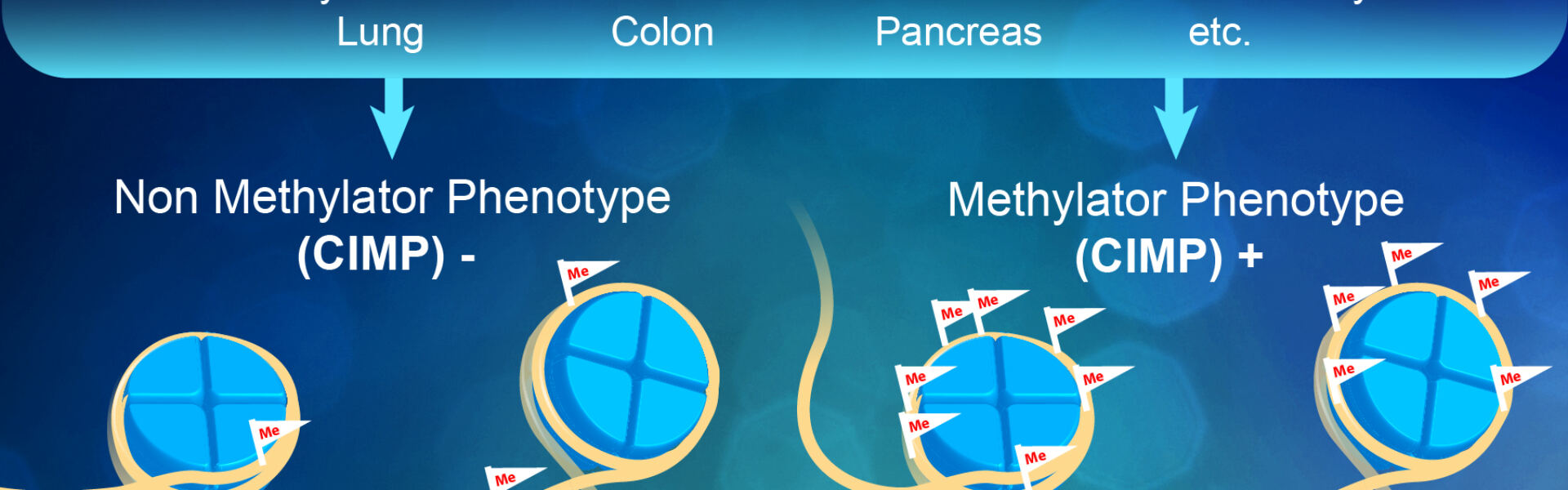
Two mechanisms are worth knowing by name. The first is DNA methylation: small methyl groups attach to specific points on the DNA, and where they cluster they tend to quieten the nearby gene, like a strip of tape over a switch. The second involves histones, the protein spools around which DNA is wound; chemical tags on these spools loosen or tighten the coil, making a gene easier or harder to read. Together these marks make up much of what scientists call the epigenome: not a second code, but a system of annotations on the first.
The crucial point, and the one most often lost in popular accounts, is this: experience does not rewrite your DNA. It changes how your DNA is read. The letters stay the same; the emphasis shifts. Hold on to that sentence, because almost every honest statement in this field is a careful version of it.
Gene expression and environment: the core relationship
“Gene expression and environment” names the two-way street between what happens around and inside an organism and which of its genes are actively doing work. Light, temperature, diet, infection, social contact, stress — all of these can shift patterns of gene expression, often through epigenetic marks. This is not exotic. It is how a plant knows to flower in spring, how your muscles adapt to training, how a tan forms. The body is not a sealed machine running a fixed program; it is a system in continuous conversation with its surroundings.
What makes the behavioural side of this story so striking is that the “environment” can include something as intangible as the quality of early care. And here the evidence is unusually good.
A human case: the Dutch Hunger Winter
Before leaving the laboratory mouse, it is worth seeing the same principle at work in people — not in a contested study, but in one of the most carefully documented episodes in human biology. In the final winter of the Second World War, a Nazi blockade cut off food to the western Netherlands, and for several months a well-fed population was forced to survive on a few hundred calories a day. The famine lifted when the war ended, and because the Dutch kept meticulous medical records, scientists could later follow the children who had been in the womb during those months.
Decades on, researchers led by Bastiaan Heijmans and Lambert Lumey found that people conceived during the famine carried, as adults in their sixties, measurably different methylation of a growth-related gene (IGF2) compared with their own unexposed siblings. A few months of prenatal environment had left a durable epigenetic signature, visible half a century later, and the effects depended on exactly when in pregnancy the famine struck. This is not a story about inherited trauma or mystical memory. It is a sober, replicated demonstration that the environment of early development can register in the regulation of the human genome and stay there — the agouti mouse, written in a human life.
The maternal-care experiments
In the early 2000s, a group led by Michael Meaney and Moshe Szyf noticed that rat pups raised by attentive mothers — mothers who licked and groomed them often — grew into calmer adults, better at regulating stress, than pups raised by less attentive mothers. That alone is unremarkable; good parenting shapes behaviour in many species. What they found next was not.
In the calmer, well-tended rats, a gene in the hippocampus that helps shut down the stress response — the glucocorticoid receptor gene — carried fewer methylation marks and was more active. In the less-tended rats, the same gene was more heavily methylated and more silent. The difference appeared in the first week of life, tracked the mother’s behaviour, and persisted into adulthood. In their 2004 paper, Weaver and colleagues showed it could be reversed pharmacologically, which made the causal story more convincing: the mark was not destiny, it was a setting. Cross-fostering experiments — giving a pup to a different mother — showed that the care, not the genes of the birth mother, drove the pattern.
This is the heart of behavioural epigenetics: a relational experience, repeated early and often, leaving a biochemical trace on how a stress gene is read for the rest of a life. It is one of the most replicated findings in the field.
From rats to human brains
The obvious question is whether anything comparable happens in people. The most cited attempt to answer it came in 2009, when McGowan, Meaney, Szyf and colleagues examined post-mortem brain tissue from the hippocampus of people who had died by suicide. Those with a documented history of childhood abuse showed more methylation of the same glucocorticoid-receptor gene, and less of its activity, than both suicide victims without such a history and people who had died of other causes. The parallel to the rat work was hard to miss.
It is important to be careful here. This is a correlation in a relatively small post-mortem sample, not a controlled experiment; it cannot prove that abuse caused the methylation, and human studies of this kind have been genuinely difficult to replicate at scale. But taken together with the animal work, it points toward a serious and sobering possibility: that early adversity can register in the regulation of the human genome, in tissue as intimate as the brain. Reviews through 2025 continue to treat early-life stress as one of the better-supported arenas for epigenetic effects on neural development and plasticity, while stressing how much remains uncertain about mechanisms and permanence.
Early-life stress, plasticity, and the question of reversibility
If experience can quieten a gene, can later experience speak up again? This is where the news is, on balance, hopeful — and where caution matters most.
The brain is not fixed after childhood. A 2025 review in Neuropsychopharmacology surveying epigenetic regulation of brain development concluded that many stress-related epigenetic marks are better understood as dynamic settings than as permanent scars: shaped by early environment, but open to modification by later environment, enriched experience, and in some cases by targeted interventions. The animal literature shows that environmental enrichment and improved later care can shift some of these patterns.
None of this licenses the comforting slogan that “you can rewrite your genes with the right mindset.” That is not what the science says, and it is not a claim this article will make. What the science supports is more modest and, arguably, more interesting: that the regulatory layer of the genome is responsive, not frozen — that the body keeps listening to experience across a lifetime, even if what it does with that experience is constrained, partial, and far from fully understood.
The harder question: can experience be inherited?
Here the field splits, and honesty requires drawing a sharp line.
Within a single life, the evidence that experience modulates gene expression is strong. The far more dramatic claim — that an experience undergone by a parent, or a grandparent, can be biologically inherited by descendants who never lived through it — is a different order of assertion, and it is the subject of serious scientific dispute.
Some findings have fuelled the excitement. The agouti-mouse work shows maternal diet shaping an offspring’s epigenome in the womb. A widely publicised 2014 study by Dias and Ressler reported that mice trained to fear a specific odour produced offspring and even grand-offspring that startled at the same smell, apparently without having learned to. In humans, Rachel Yehuda’s group reported altered methylation of a stress-related gene (FKBP5) in the adult children of Holocaust survivors. Each of these is provocative, and each has entered popular culture as settled proof that “trauma is passed down in the DNA.”
It is not settled. In 2024, the geneticist Adrian Bird published a pointed critical perspective arguing that genuine transgenerational epigenetic inheritance in mammals is, at best, rare and poorly evidenced — and that most striking claims fail to rule out simpler explanations. Methylation marks in mammals are largely erased and reset between generations, which is a formidable biological barrier to passing them on. The human studies, in particular, struggle with small samples, confounding factors (shared environment, nutrition, continued stress, social circumstance), and difficulties of replication. A 2026 analysis in Trends in Genetics went further, calling for a wholesale rethink of how evidence for epigenetic inheritance in human research is evaluated, and warning that the construct has been stretched well beyond what the data can bear. An international symposium in Zurich in 2025 captured the same tension: real mechanisms in some plants and invertebrates, and a field still arguing hard about what, if anything, carries across generations in humans.
So the responsible summary is a split verdict. Experience shaping gene expression within a lifetime: well supported. Experience inherited biologically across human generations: contested, probably over-claimed, and not something to build a worldview on.
Why the distinction matters
It would be easy to let the exciting version win, because it tells a beautiful story. But the beautiful story, stated as fact, does real harm. It can imply that people are determined by ancestral suffering they cannot touch; it can turn a contested hypothesis into a diagnosis; and, in the health arena, it can be used to sell certainty that nobody has earned. Keeping the line clear — between what is established, what is plausible, and what is merely hoped for — is not timidity. It is the condition under which the genuinely remarkable findings keep their force.
And the established findings are remarkable enough. That the warmth of early care can register in the chemistry of a stress gene; that the body carries a responsive, listening layer above its fixed code; that experience leaves traces, within a life, in how we are read rather than in what we are written as — this is already a picture of a human being far more open, and far more in relationship, than the old image of DNA as unalterable fate.
An open system: reading epigenetics through Ad Unum
There is a reason this science resonates with people drawn to energetic and holistic ways of understanding the body, and it is worth naming carefully, without overstating it.
The philosophy of Ad Unum rests on a single intuition: that nothing is truly separate. The body is not an isolated object sealed off from its world; it is a node in a web of relationships — with environment, with others, with experience — and it responds to that web continuously. For a long time, the dominant scientific image seemed to say the opposite: that we are run by a fixed genetic program, handed down and closed. Epigenetics complicates that image. It describes, in the sober language of methyl groups and chromatin, a body that is an open system in constant exchange with what surrounds it.
The analogy should be held with both hands and no exaggeration. Epigenetics does not prove any philosophical claim, and it is not a mechanism for energy work or a substitute for medical care. What it offers, through a different lens, is a convergence: the science keeps arriving, by its own rigorous route, at a picture the Ad Unum perspective has long held — that separation is the illusion, and relationship is the deeper fact. The Ad Unum Energy Healing approach and the in-person courses begin from the same premise: that a person is not a closed machine to be fixed, but a living system that remains, at every level, in conversation with the whole.
That is not a medical statement, and it is not offered as one. The value of the epigenetic story, for anyone exploring the Ad Unum Experience, is not a promise. It is a confirmation, in the language of the laboratory, of an older intuition: that we are made and remade in relationship, and that the body never stops listening.
Frequently asked questions
Does experience change your DNA?
No — not the DNA sequence itself. Experience can change epigenetic marks, such as DNA methylation, that affect how strongly a gene is expressed. The genetic letters stay the same; what shifts is how they are read. This distinction is the single most important thing to understand about epigenetics and experience.
What is DNA methylation in simple terms?
DNA methylation is the attachment of small chemical tags (methyl groups) to specific points on DNA. Where these tags cluster, they usually quieten the nearby gene. Methylation is one of the main ways the environment can turn the “volume” of a gene up or down without altering the gene’s code.
Is inherited trauma scientifically proven?
No. The idea that trauma is passed down biologically across human generations is contested and, in the view of several prominent geneticists, over-claimed. Some animal and human studies are suggestive, but they face serious problems with replication and confounding factors. Experience shaping gene expression within a single lifetime is far better supported than inheritance across generations.
Can epigenetic changes be reversed?
Some can. Research suggests many stress-related epigenetic marks are dynamic rather than permanent, and can be modified by later environment, enriched experience, and in some cases targeted interventions. This is an area of active study, and reversibility varies by mark, tissue and timing — it is not a guarantee.
What is behavioural epigenetics?
Behavioural epigenetics studies how experiences — especially early-life experiences such as the quality of care — leave epigenetic marks that influence behaviour and stress regulation later in life. The maternal-care studies in rats, and their human parallels, are its founding examples.
Does epigenetics support energy or holistic healing?
Epigenetics does not prove or provide a mechanism for any specific healing practice, and it is not a substitute for medical or psychological care. What it offers is a broader, converging picture: the body as an open system in continuous relationship with its environment and experience, rather than a closed genetic program. That picture is compatible with a holistic view, but compatibility is not proof.
Is this article medical advice?
No. This is educational content about current research. Nothing here is a diagnosis, a treatment, or a promise of any health outcome, and it should never replace the advice of qualified medical or psychological professionals.
Sources
- Waterland RA, Jirtle RL. “Transposable elements: targets for early nutritional effects on epigenetic gene regulation.” Molecular and Cellular Biology, 2003. doi.org/10.1128/MCB.23.15.5293-5300.2003
- Heijmans BT, Tobi EW, Stein AD, et al. “Persistent epigenetic differences associated with prenatal exposure to famine in humans.” PNAS, 2008. doi.org/10.1073/pnas.0806560105
- Weaver ICG, Cervoni N, Champagne FA, et al. “Epigenetic programming by maternal behavior.” Nature Neuroscience, 2004. doi.org/10.1038/nn1276
- McGowan PO, Sasaki A, D’Alessio AC, et al. “Epigenetic regulation of the glucocorticoid receptor in human brain associates with childhood abuse.” Nature Neuroscience, 2009. doi.org/10.1038/nn.2270
- “Epigenetic regulation of brain development, plasticity, and response to early-life stress.” Neuropsychopharmacology, 2025. nature.com/articles/s41386-025-02179-z
- Bird A. “Transgenerational epigenetic inheritance: a critical perspective.” Frontiers in Epigenetics and Epigenomics, 2024. doi.org/10.3389/freae.2024.1434253
- “Rethinking evidence for epigenetic inheritance in human research.” Trends in Genetics, 2026. sciencedirect.com/science/article/pii/S0168952526001915
- Dias BG, Ressler KJ. “Parental olfactory experience influences behavior and neural structure in subsequent generations.” Nature Neuroscience, 2014. doi.org/10.1038/nn.3594
- Yehuda R, Daskalakis NP, Bierer LM, et al. “Holocaust Exposure Induced Intergenerational Effects on FKBP5 Methylation.” Biological Psychiatry, 2016. doi.org/10.1016/j.biopsych.2015.08.005
- “Symposium report — epigenetic inheritance: impact for biology and society (Zurich, 2025).” Environmental Epigenetics, 2026. academic.oup.com/eep/article/12/1/dvag028/8777333
- “An epigenetic framework for understanding contextual influences on neural and socio-emotional development.” Developmental Cognitive Neuroscience, 2026. sciencedirect.com/science/article/pii/S1878929326000496

Director of Reconnective Academy International
Author of Consciousness and Healing
Founder of Ad Unum Experience