
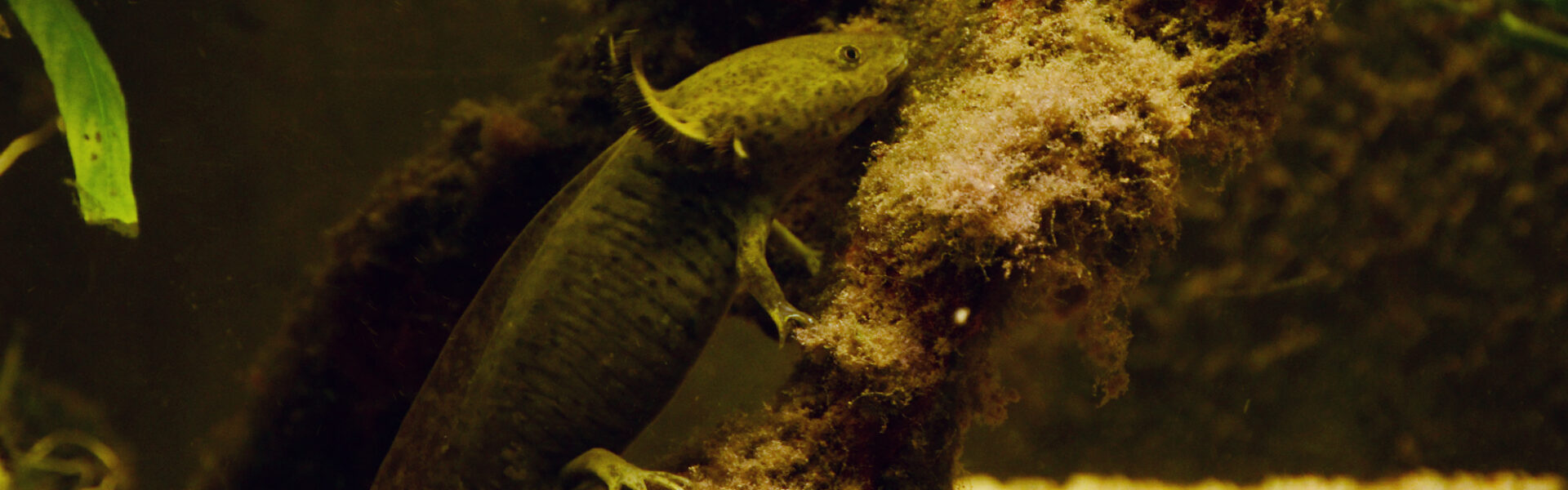
Every cell in your body carries a tiny voltage. Long before the first neuron fires, these electrical patterns are already deciding where a head goes, how many fingers a hand will have, and when a wound should stop closing. This is the quiet science of bioelectricity — and it is rewriting what we thought we knew about how living form is built, repaired, and remembered.
In this article
- Clear definitions first: bioelectricity, morphogenetic fields, Ad Unum
- What bioelectricity actually is (and what it is not)
- Morphogenetic fields: an old idea, a new mechanism
- The two-headed worm: memory stored in electricity
- Regrowing a leg: 24 hours that reopen a program
- When the pattern breaks: bioelectricity and cancer
- Living robots: cells that build forms nature never made
- The collective intelligence of cells
- Reading this through the Ad Unum lens — carefully
- Frequently asked questions
- Sources
Clear definitions first
Bioelectricity is the electrical signalling that all living cells generate across their membranes, not only nerve and muscle cells. Ion channels, pumps and gap junctions move charged particles in and out of the cell, creating a voltage difference called the resting membrane potential. Networks of these voltages form slow, large-scale electrical patterns that help instruct how tissues grow and take shape.
A morphogenetic field is the organising influence that guides a group of cells toward a specific anatomical outcome — a limb, an eye, a whole body axis. First proposed a century ago as an abstraction, it is now being given a concrete, measurable substrate: the bioelectric state of a tissue.
Ad Unum Experience is the broader framework of Reconnective Academy International that reads human wellbeing through the lens of interconnection and non-separation — the idea that the parts of a living system are organised by, and belong to, a larger whole. Ad Unum Energy Healing is its applied practice: a facilitated session in which the practitioner does not act on the body but helps create the conditions under which the system can return to its own self-regulation. Its pillars are science, philosophy and energy — explored respectively on our science, philosophy and energy and healing pages.
This article is educational. Nothing here is a medical claim or a treatment protocol. The science of bioelectricity is laboratory biology; the Ad Unum reading is a philosophical analogy, offered without any suggestion that it cures or replaces medical or psychological care.
What bioelectricity actually is (and what it is not)
When most people hear “electricity in the body,” they think of the brain and the nervous system — the spikes that let a neuron talk to its neighbour in milliseconds. That fast electricity is real, but it is only the loudest voice in a much larger conversation.
Every cell, including skin cells, liver cells and the cells of a healing wound, holds a steady voltage across its outer membrane. A typical cell sits somewhere between roughly minus ten and minus ninety millivolts relative to the outside. That number is not a passive by-product of being alive. It is set, moment by moment, by proteins embedded in the membrane: ion channels that let specific charged atoms flow, pumps that push them against the current, and gap junctions that wire neighbouring cells together into shared electrical circuits.
Because cells are electrically coupled, their individual voltages add up into tissue-wide patterns. A region that is relatively depolarised sits next to a region that is relatively polarised, and the gradient between them carries information. Crucially, this information operates on a timescale of minutes to hours — not the milliseconds of thought — and over distances that span whole organs. It is a slow, structural electricity, and it turns out to be one of the languages the body uses to decide what to build and where.
The distinction matters. Bioelectricity in this sense is not about “energy fields” in the colloquial, mystical use of the phrase. It is measurable with voltage-sensitive fluorescent dyes, manipulable with well-characterised drugs, and reproducible across laboratories. The surprise is not that it exists — physiologists have measured membrane potentials for over a century — but how much anatomical decision-making it appears to carry.
Morphogenetic fields: an old idea, a new mechanism
How does a single fertilised egg become a body with a definite shape? A genome is a parts list — it specifies proteins — but it does not contain a blueprint that says “two eyes, here and here, this far apart.” Something has to coordinate millions of cells so that the outcome is a coherent organism rather than a disorganised lump of correct molecules.
Early embryologists reached for the concept of a field. Hans Driesch showed that half a sea-urchin embryo could still produce a whole, correctly proportioned larva — as if the cells were consulting a target that existed above the level of any single cell. Paul Weiss and Conrad Waddington developed the language of morphogenetic fields and developmental “landscapes” to describe this goal-directed robustness. For decades the field remained a useful abstraction without a known physical carrier, and in some popular writing the term drifted toward speculative, untestable territory.
What has changed is that a candidate mechanism has arrived. The bioelectric state of a tissue — its map of voltages across coupled cells — behaves exactly like the kind of large-scale, pattern-holding information a morphogenetic field would need. In 2025, work from the Levin laboratory at Tufts University described a “field-mediated bioelectric basis of morphogenetic prepatterning,” making explicit the link between measurable voltage maps and the abstract fields of classical embryology. The field, in this reading, is not mystical. It is the organism’s own electrical prepattern, laid down before and alongside the genes that build the final structure.
This is a genuinely different way to think about biology. The genome supplies the hardware; the bioelectric field supplies something closer to the software layer that decides how the hardware is arranged. And software, unlike hardware, can sometimes be rewritten.
The two-headed worm: memory stored in electricity
If you want to see how far bioelectric control can go, look at the planarian flatworm. Cut one into pieces and each piece knows which end should become a head and which a tail, then regenerates the missing parts in correct proportion. This is one of biology’s most striking demonstrations of a body “knowing” its own target shape.
Here is where it becomes remarkable. By briefly interfering with the electrical coupling between cells — for example with octanol, which blocks gap junctions — researchers can change the bioelectric pattern that normally encodes “one head, one tail.” A fragment treated this way can regenerate with two heads, one at each end. That alone would be interesting. But the deeper finding is what happens next: when those two-headed worms are cut again, with no further treatment, the new fragments keep regenerating as two-headed worms.
The genetic sequence was never touched. What was altered, and what persists across rounds of regeneration, is a stable electrical state — a pattern of voltages held in the network of somatic cells. Researchers describe this as a form of bioelectric memory: the target morphology is stored not only in DNA but in a physiological circuit that can settle into more than one stable configuration. Studies on the “bistability of somatic pattern memories” formalise this: the same genome can support alternative stable anatomies, and which one the animal expresses depends on its bioelectric state.
Read slowly, this upends a common intuition. We tend to imagine that the shape of a body is dictated, fully and only, by its genes. The planarian says otherwise: the genes constrain what is possible, but a separable, rewritable electrical pattern decides which of those possibilities is actually built — and remembered.
Regrowing a leg: 24 hours that reopen a program
Flatworms regenerate easily; adult vertebrates, as a rule, do not. An adult frog that loses a leg normally seals the wound with scar tissue and forms, at best, a featureless spike. So a 2022 experiment published in Science Advances is worth sitting with.
Researchers fitted African clawed frogs that had lost a hind leg with a small wearable bioreactor — a silk-based cap they called a BioDome — loaded with a cocktail of five drugs. The cocktail was designed not to “grow a leg” directly but to send the right early signals: calm the inflammation, suppress scar-forming collagen, and encourage the growth of nerves, blood vessels and muscle. The device stayed on for just twenty-four hours.
That single day of intervention was enough to set a months-long program in motion. Over roughly eighteen months, treated frogs regrew substantial, functional legs — bony structure, nerve supply, even nub-like toes — limbs they could stand on, push off with and use to swim. The point is not that the problem of human limb regeneration is solved; it is far from it. The point is conceptual: a brief, well-timed nudge to the body’s early signalling can reopen a developmental program that seemed permanently closed. The information for building a leg was never deleted. It was waiting for the right conditions to be read again.
That phrase — the right conditions — is one to keep in mind.
When the pattern breaks: bioelectricity and cancer
If a healthy body is a chorus of cells singing the same anatomical song, cancer can be understood, in part, as cells that have stopped listening. The conventional account is genetic: mutations accumulate, and a cell defects from the collective. Bioelectric research adds a complementary layer to that story.
In several model systems, cells that are about to turn cancerous show a characteristic electrical signature — an abnormal depolarisation — before obvious genetic or structural changes appear. Using voltage-sensitive dyes, such regions can sometimes be spotted precisely because their electrical state has drifted away from the healthy pattern. More provocatively, experiments have shown that deranging the bioelectric state of otherwise normal tissue can induce tumour-like growth, while restoring a healthy voltage pattern can suppress tumour formation even in the presence of strong cancer-driving mutations.
This does not mean cancer is “just electricity,” and it is emphatically not a treatment claim. It means that the question of whether a cell behaves as part of the whole, or breaks away to pursue its own agenda, is influenced by its position in a shared electrical network — not by its genome alone. The practical hope is a class of interventions sometimes called electroceuticals: ion-channel-targeting drugs aimed at normalising tissue voltage rather than killing cells outright. That work is early and experimental, and it belongs firmly in the laboratory and the clinic, not in any wellness practice.
Living robots: cells that build forms nature never made
Perhaps the most vivid demonstration of how much latitude cells have comes from so-called living robots. Starting with skin cells from frog embryos, scientists at Tufts and the University of Vermont found that the cells, freed from the usual body context, spontaneously reorganised into small, mobile organisms that could swim, navigate and even, remarkably, gather loose cells to assemble copies of themselves. These were named xenobots.
The same principle was then shown with human cells. From adult human airway cells, researchers grew tiny self-assembling clusters they called anthrobots, reported in Advanced Science in 2023. Left to their own devices, these clusters moved on their own — and, placed over a scratch in a sheet of neurons in a dish, they encouraged the damaged neural tissue to bridge the gap and grow across it.
What is striking is that nobody designed these creatures gene by gene. The cells were simply given a new context, and they explored what the biologists call their morphospace — the range of forms their own biology makes possible. Human cells, it turns out, can build structures the human body itself has never produced. The genome did not specify an anthrobot; the cells, as a collective, discovered it. The building plan lives at least partly in the dynamics of the group, not only in the sequence inside each nucleus.
The collective intelligence of cells
Pull these threads together and a picture emerges that is less a machine than a society. Cells are competent agents. Each pursues small goals — maintaining its voltage, staying coupled to its neighbours, responding to local signals — and out of those local competencies, a coherent large-scale goal emerges: build and maintain this particular anatomy. When a planarian fragment regenerates the correct number of heads, when a wound stops closing at exactly the right moment, when a frog’s cells restart a dormant program, the organism is navigating toward a target state in anatomical space, much as a traveller navigates toward a destination.
The bioelectric network is one of the main ways this navigation is coordinated. It lets cells hold a shared representation of the whole, compare the current state to the target, and act to reduce the difference. This is why researchers increasingly use the vocabulary of information, memory and even cognition — carefully defined and operationalised — to describe tissues that have no brain. The intelligence here is not conscious thought; it is goal-directed problem-solving distributed across a collective.
And this is the hinge where honest science meets a worldview worth examining.
Reading this through the Ad Unum lens — carefully
At Ad Unum, the central intuition is one of non-separation: that the parts of a living system are not independent fragments but members of a whole that organises them. For a long time this was a philosophical position, easy to admire and easy to dismiss as poetry. Bioelectric biology offers something unusual — a rigorous, laboratory-grounded analogy for exactly that intuition.
Consider what the research shows, stated plainly. The shape of a body is held not only in its parts (the genes inside each cell) but in a pattern that belongs to the collective (the bioelectric field across coupled cells). The whole, in a concrete and measurable sense, organises the parts. A fragment can reconstruct the whole because the information for the whole is distributed, not localised. These are statements about flatworms and frogs — but they rhyme, unmistakably, with the idea that a living system is a unity before it is a sum of pieces.
The second resonance is about self-regulation. The frog did not have its leg “built” by the drug cocktail; the cocktail created early conditions, and the body’s own distributed intelligence did the building. This is the exact logic of an Ad Unum Energy Healing session, and it is worth being precise about. The facilitator does not heal and does not act on the body. The facilitator helps create the conditions under which the system can return to its own self-regulation. There is no induction and no suggestion: Ad Unum is not hypnosis. The analogy to the laboratory is not that a session regrows tissue — it does not, and we make no such claim — but that in biology, as in the Ad Unum worldview, restoration tends to come from reopening the system’s own capacity rather than from imposing an outcome upon it.
The third resonance is the direction of the whole thing. In the Ad Unum reading, interconnection points somewhere — toward unity, toward the One, and toward a kind of evolutionary return. Bioelectricity will not prove a metaphysics, and it does not try to. But it does something quieter and, in its way, more persuasive: it shows that “the whole organises the parts” is not merely a comforting figure of speech. In the humblest of animals, it is how bodies are actually made. If you would like to go further into how we hold science and meaning together without collapsing one into the other, our philosophy pages and our courses are where that conversation continues.
A closing caution, stated as firmly as the wonder. None of this is a therapy, a diagnosis or a cure. The biology described here is early-stage research on model organisms. The Ad Unum practice is a complementary, educational and experiential path that supports awareness and wellbeing — it never substitutes for medical or psychological care, and anyone facing a health condition should work with qualified clinicians.
Frequently asked questions
What is bioelectricity in simple terms?
Bioelectricity is the voltage that every living cell maintains across its membrane using ion channels, pumps and gap junctions. Beyond fast nerve signals, these slow, tissue-wide voltage patterns help instruct how the body grows, heals and takes shape.
What is a morphogenetic field?
It is the organising influence that guides a group of cells toward a specific anatomical result, such as a limb or a body axis. Once a purely abstract idea, it now has a candidate physical basis: the bioelectric voltage pattern across a tissue.
Is bioelectricity the same as “energy healing”?
No. Bioelectricity is measurable laboratory biology — millivolts across cell membranes, studied with dyes and drugs. We use it as an analogy for the Ad Unum idea of non-separation, but we do not claim that energy practices change cellular voltages or treat disease.
Can humans regrow limbs because of this research?
Not yet. Experiments have reopened regenerative programs in frogs and flatworms, which is a conceptual breakthrough, but human regeneration remains a distant and unproven goal. These studies are research, not clinical treatments.
What are electroceuticals?
Electroceuticals are proposed interventions — often ion-channel-targeting drugs — that aim to restore healthy voltage patterns in tissue rather than destroy cells. The approach is experimental and belongs to medical research, not to any wellness practice.
How does this connect to Ad Unum Energy Healing?
It offers a scientific analogy, not a mechanism. In biology, the whole organises the parts and restoration comes from reopening the system’s own capacity. An Ad Unum session works by helping create conditions for self-regulation — with no induction and no suggestion. Ad Unum is not hypnosis, and it makes no medical claims.
Is any of this proven to improve health?
The bioelectric research is promising basic science, not validated therapy. Ad Unum is a complementary, educational and experiential path. Neither replaces diagnosis or treatment by qualified health professionals.
Sources
- Murugan et al. (2022), Science Advances — Acute multidrug delivery (BioDome) and functional limb regeneration in adult frogs.
- Gumuskaya et al. (2023), Advanced Science — Anthrobots: self-constructing living robots from adult human cells.
- Kriegman et al. (2020), PNAS — A scalable pipeline for designing reconfigurable organisms (xenobots).
- Kriegman et al. (2021), PNAS — Kinematic self-replication in reconfigurable organisms.
- Pietak & Levin et al. (2021), Phil. Trans. R. Soc. B — Bistability of somatic pattern memories in bioelectric circuits.
- Durant et al. (2016), Regeneration — Physiological controls of large-scale patterning in planarian regeneration.
- Levin (2014), Molecular Biology of the Cell — Molecular bioelectricity: endogenous voltage potentials and pattern regulation.
- Scientific Reports (2024) — Multicellular adaptation to electrophysiological perturbations: deterministic and stochastic bioelectrical models.
- Tufts University, Levin Lab — Bioelectricity publications archive.
- Tufts Now (2024) — With living robots, scientists unlock cells’ power to heal.
Director of Reconnective Academy International
Author of Consciousness and Healing
Founder of Ad Unum Experience


