
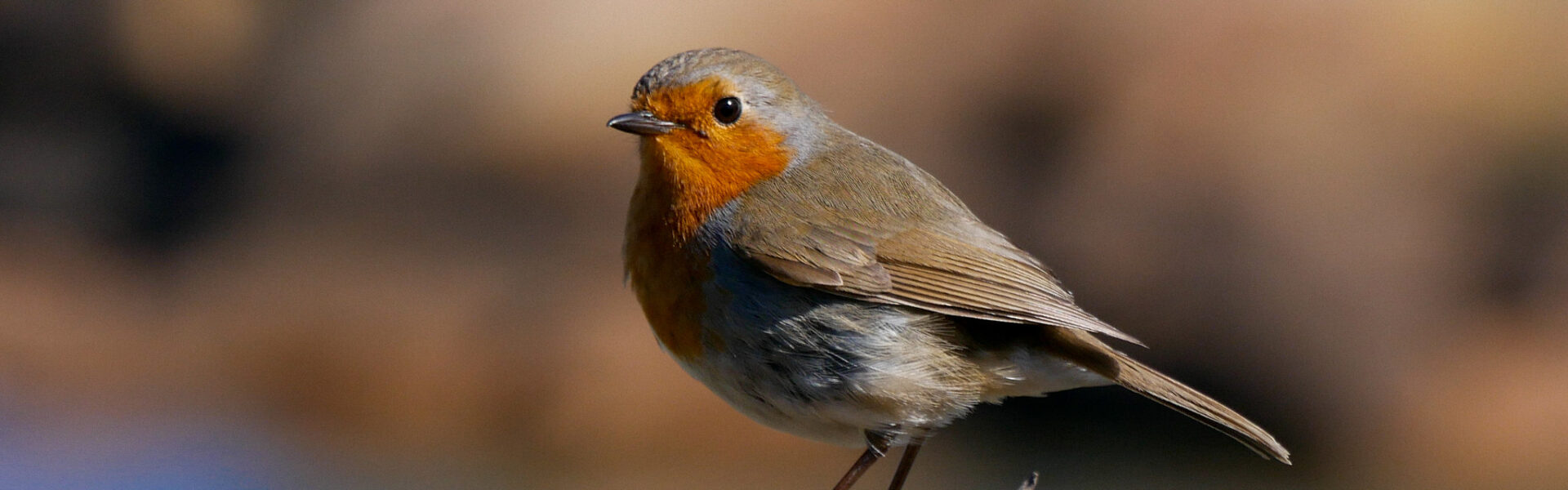
Quantum biology is the study of how living systems use genuinely quantum-mechanical effects — coherence, superposition, entanglement, spin, and tunnelling — to carry out the everyday work of being alive. For most of the twentieth century, biologists assumed that the warm, wet, jostling interior of a cell would wash out such delicate effects instantly. A growing body of experimental evidence suggests otherwise. From the first microsecond of photosynthesis to the way a migratory robin reads the Earth’s magnetic field, life appears to have learned to work with the quantum world rather than around it.
This article explains what quantum biology actually claims, what the strongest experiments show, and where the honest limits lie. It then turns to a question the data cannot answer but cannot quite silence either: if the boundary between an organism and its physical substrate is thinner than we thought, what might that suggest about connection, attention, and the ancient intuition that reality is, at bottom, one? That is the terrain of the Ad Unum vision, and we will treat the link between physics and philosophy as an analogy to think with — never as proof, and never as medicine.
In this article
- What is quantum biology?
- Photosynthesis: coherence in the green machinery
- How birds read the magnetic field: the radical-pair mechanism
- Tunnelling: enzymes, DNA, and the sense of smell
- Why warm, wet, noisy life should not be quantum — but sometimes is
- What quantum biology does not say
- From coherence to connection: the Ad Unum reading
- A thought experiment: the robin and the field
- What this means for how we pay attention
- Frequently asked questions
- Sources
What is quantum biology?
Quantum biology is the branch of science that investigates where quantum effects make a functional difference in living organisms. The key word is functional. Every molecule obeys quantum mechanics in the trivial sense that atoms and bonds are quantum objects. Quantum biology asks something sharper: are there biological tasks that living systems perform measurably better, faster, or at all because they exploit coherence, spin correlations, or tunnelling — effects that a purely classical picture cannot reproduce?
The distinction matters because it makes the field testable. If a process is merely “quantum” in the trivial sense, nothing new is learned. If, instead, a bird’s navigation depends on the spin state of two electrons, or a plant’s light-harvesting depends on wave-like energy transfer, then we can design experiments, alter magnetic fields, swap atoms for their heavier isotopes, and watch the biology change. That is exactly what researchers have begun to do. A widely cited review in Nature Physics framed the modern agenda clearly: identify the candidate phenomena, then hold each to the standard of measurable, non-classical advantage.
Three phenomena anchor the field today: coherent energy transfer in photosynthesis, the radical-pair mechanism behind animal magnetoreception, and quantum tunnelling in enzymes. Each is worth understanding on its own terms before we ask what, if anything, it means beyond the laboratory.
Photosynthesis: coherence in the green machinery
Photosynthesis begins with a photon and a race against time. When light strikes a leaf or a photosynthetic bacterium, the energy must travel from the pigment that absorbed it to a reaction centre where chemistry can begin — and it must arrive before it dissipates as heat. In the best-studied systems this transfer is astonishingly efficient, approaching near-total capture of the initial excitation. The question is how.
In 2007, a landmark experiment using two-dimensional electronic spectroscopy reported long-lived wave-like oscillations in the Fenna–Matthews–Olson complex of green sulphur bacteria, interpreted as evidence that the excitation energy explores multiple pathways simultaneously, as a coherent superposition, rather than hopping randomly from one pigment to the next. The metaphor that stuck was the quantum walk: instead of a drunkard’s stumble through the molecular forest, the energy behaves more like a wave sampling many routes at once and settling efficiently on a good one.
The debate that made the field stronger
What followed is a model of how science should work. The 2007 result was thrilling, and it was also challenged. Sceptics argued that some of the observed oscillations reflected vibrations of the molecular scaffolding — ordinary molecular motion — rather than purely electronic coherence, and that early experiments at cryogenic temperatures might not represent a sunlit leaf at noon. Over the following decade, the community refined its methods, distinguished electronic from vibrational contributions, and moderated the strongest early claims.
The mature verdict is more interesting than the headline. Coherence of some kind is real and measurable in these complexes; whether it confers a large efficiency advantage under natural conditions remains debated. Quantum biology, in other words, did not collapse under scrutiny — it grew up. The honest position is that photosynthesis shows quantum effects at the edge of relevance, and that the field’s job is to measure that edge precisely rather than to romanticise it.
How birds read the magnetic field: the radical-pair mechanism
If photosynthesis is quantum biology’s founding puzzle, avian magnetoreception is its most vivid. Migratory birds such as the European robin can sense the direction of the Earth’s magnetic field — a field so weak it barely deflects a compass needle — and use it to orient across continents. For decades no one could say how a warm biological tissue could detect something so faint.
The leading explanation is the radical-pair mechanism. Inside a protein called cryptochrome, found in the light-sensing cells of the bird’s retina, absorbing a photon can knock an electron from one part of the molecule to another, creating two unpaired electrons — a “radical pair.” The spins of these two electrons are quantum-correlated, oscillating between configurations (physicists call them singlet and triplet states) at rates that the surrounding magnetic field can subtly tune. Because the two possible spin states lead to different chemical products, the bird’s biochemistry becomes, in effect, a chemical compass sensitive to magnetic orientation.
Cryptochrome, the robin, and the isotope test
In 2021, researchers isolated cryptochrome 4 from the European robin and compared it with the same protein from birds that do not migrate long distances. The migratory robin’s protein proved more magnetically sensitive in vitro, and the team traced the sensitivity to specific electron-transfer steps between a flavin cofactor and a chain of tryptophan amino acids. It was among the most direct pieces of evidence that a specific molecule could host the physics the theory required.
The story keeps developing. A 2024 study argued that tightly bound radical pairs can respond to Earth-strength fields when the recombination reaction is strongly asymmetric — a scenario that invokes the quantum Zeno effect, in which frequent effective “measurement” of a quantum system slows its evolution. Other work continues to test which cryptochrome variants are actually relevant in the living eye, and some candidate proteins have been ruled out. This is not a field resting on a single dramatic claim; it is a field arguing with itself in print, which is how trust is earned.
Tunnelling: enzymes, DNA, and the sense of smell
The third pillar is the oldest and least controversial. Quantum tunnelling lets a particle pass through an energy barrier it classically should not be able to cross, because its position is described by a spread-out wave rather than a point. Tunnelling is not exotic in physics — it powers the Sun and the flash memory in your phone — and biology appears to use it routinely.
Many enzymes accelerate reactions by helping protons or electrons tunnel from one place to another, a shortcut that classical chemistry cannot offer. The signature is an unusually large kinetic isotope effect: replace a hydrogen atom with heavier deuterium and the reaction slows far more than mass alone would predict, because the heavier particle tunnels less readily. Electron tunnelling over surprisingly long molecular distances is also central to cellular respiration, the process that turns food and oxygen into usable energy. More speculative proposals extend tunnelling to DNA mutation and even to the sense of smell, where it has been suggested that we detect not only a molecule’s shape but the vibration of its bonds. These frontier ideas remain contested — a useful reminder that quantum biology contains both well-founded results and open conjectures, and that a careful reader keeps the two apart.
Why warm, wet, noisy life should not be quantum — but sometimes is
Here is the deep surprise. Quantum coherence is fragile. In the laboratory, physicists preserve it with near-perfect vacuums and temperatures a hair above absolute zero, because any interaction with a warm, jostling environment causes decoherence — the quantum wave collapses into ordinary classical behaviour almost instantly. A living cell is the opposite of a physicist’s cryostat: hot, crowded, wet, and in constant thermal motion. By every naive expectation, biology should be the last place to find working quantum effects.
Yet the emerging picture is subtler and more beautiful. In several systems, the biological environment does not simply destroy coherence; it may sculpt it. Protein scaffolds seem to tune molecular vibrations so that noise, instead of erasing the quantum effect, can actually assist energy transfer — a phenomenon sometimes called environment-assisted transport. If that reading holds, then life is not fighting the quantum world with brute insulation. It is doing something far more elegant: shaping its own noise so that the quantum and the classical cooperate. Recent reviews of quantum phenomena in biological systems, and of the tools — quantum simulation, quantum sensing — now being turned on these questions, describe a field moving from “does this happen?” toward “how, exactly, and how far?”
What quantum biology does not say
Because the phrase “quantum biology” is easily borrowed by marketing and mysticism, it is worth being precise about the boundaries. Quantum biology does not claim that thoughts move objects, that intentions rewrite matter, or that a person can heal disease by manipulating quantum fields. It does not license the sale of “quantum” wellness devices, and it offers no shortcut around evidence-based medicine.
A recurring criticism — one that serious researchers largely accept — is that words like superposition and entanglement are too often used as decoration, invoked to lend a scientific glow to claims that specify no mechanism and make no testable prediction. The correct response is not to abandon the questions but to raise the standard: a real quantum-biological claim names the molecule, predicts an isotope or magnetic-field effect, and can be shown to be wrong. Everything in this article that we called established meets that bar. Everything we called speculative does not yet. Holding that line is what separates science from wishful thinking — and it is the same discipline the science section of this Academy tries to model.
From coherence to connection: the Ad Unum reading
With those cautions firmly in place, we can ask the philosophical question honestly. Quantum biology delivers one image again and again: the living thing and its physical substrate are not cleanly separable. The bird’s navigation is not something added on top of chemistry; it is chemistry, entangled with a planetary field. The leaf’s harvest of light is not a machine bolted onto physics; it is physics, organised into life. The tidy line between organism and environment, between observer and observed, turns out to be a convenience of language rather than a fact of nature.
This is where the Ad Unum vision reads the science as metaphor. The Ad Unum Experience is a framework for personal growth and awareness built on a single premise: that separation is largely an artefact of perception, and that experiencing our fundamental interconnectedness — with others, with the world, with the whole — is transformative. Its guiding thread runs from physics through philosophy: the observer is never truly neutral; entanglement hints at relationships that are not local; and if everything that interacts remains, in some sense, in relationship, then the natural direction of that logic is toward union — toward the One — and back again, transformed, into engaged life.
Ad Unum Energy Healing, in turn, is a complementary practice of presence and attention that works with a person’s sense of connection and wellbeing. It is offered alongside, and never instead of, medical or psychological care. The philosophy that frames it does not claim that quantum biology proves any of this. Coherence in a chlorophyll molecule is not love; a radical pair in a robin’s eye is not enlightenment. What quantum biology offers is gentler and, in a way, more durable: a rigorously scientific reason to distrust the intuition that things are separate, sealed, and inert. If life itself is woven from relationship at its smallest scales, the felt sense of connection that practices in the energy and healing tradition cultivate may be less an escape from the physical world than a way of paying closer attention to what the physical world already is.
A thought experiment: the robin and the field
Picture a robin at dusk on the first night of its autumn migration. It has never flown this route. In its eye, photons trigger radical pairs whose spins flicker in step with a magnetic field generated by molten iron thousands of kilometres beneath its feet. The bird does not calculate. It simply turns south, guided by a quantum event coupling a single protein to the entire planet.
Now hold two truths at once. First, nothing mystical is happening: every step is, in principle, describable by physics and chemistry. Second, the description itself is staggering — a living creature is entangled, in the ordinary technical sense, with the structure of the Earth. The robin is not observing the field from outside it. The robin is in the field, made partly of its response to it. That is the image the Ad Unum vision invites us to sit with: not a claim that we can bend fields with our minds, but an invitation to notice how thoroughly we are already embedded in, and constituted by, the world we thought we were merely looking at. The lesson is not power over nature. It is participation in it.
What this means for how we pay attention
If there is a practical takeaway, it is modest and it is about attention. The observer, in quantum physics, is never a passive spectator; measurement is an interaction that helps determine what is found. Quantum biology extends the point into the living world: to be alive is to be in continuous exchange with an environment that shapes us as we shape it. Whatever one believes about the deeper metaphysics, that framing has a usable consequence. The quality of our attention is not separate from the quality of our experience; how we look participates in what we see.
This is a psychological and philosophical observation, offered for reflection and wellbeing rather than as therapy. It aligns with the courses and trainings offered through the Academy, which treat presence and attention as skills that can be learned and deepened. It does not replace professional support for any medical or mental-health condition. Held that way — with rigour on one side and openness on the other — quantum biology becomes something rare: a field where the most careful science and the oldest human intuitions can sit at the same table without either one pretending to be the other.
Frequently asked questions
What is quantum biology in simple terms?
Quantum biology studies cases where living organisms use quantum-mechanical effects — such as coherence, electron spin, and tunnelling — to perform biological tasks more effectively than classical physics alone could explain. The clearest examples involve photosynthesis, bird navigation, and enzyme reactions.
Is quantum biology an established science or speculation?
Both, in different parts. Quantum tunnelling in enzymes is well established. Coherence in photosynthesis is real but its functional importance is still debated. The radical-pair mechanism in magnetoreception is strongly supported but details are actively researched. Applications to memory, DNA mutation, and smell remain speculative.
Does quantum biology prove that consciousness is quantum?
No. Quantum biology concerns molecular processes such as energy transfer and magnetic sensing. It does not demonstrate that consciousness arises from quantum mechanics, and it makes no claim about the mind being able to influence matter through intention.
How do migratory birds use quantum effects to navigate?
Light striking the protein cryptochrome in a bird’s eye creates a pair of electrons whose quantum-correlated spins are sensitive to the Earth’s magnetic field. Because different spin states yield different chemical outcomes, the bird effectively gains a chemical compass — the radical-pair mechanism.
Can quantum biology heal illness or justify “quantum” wellness products?
No. There is no evidence that quantum-biological effects can be harnessed to cure disease, and “quantum” healing devices are not supported by the science. Wellness and awareness practices may support how a person feels, but they are complementary and never a substitute for medical or psychological care.
How does quantum biology relate to the Ad Unum vision?
Only as analogy. Quantum biology shows that living things are deeply interwoven with their physical environment, blurring the line between observer and observed. The Ad Unum Experience uses that image to explore interconnectedness and presence — a philosophical and personal-growth reading, not a claim that physics proves it.
What should I read next to go deeper?
Start with the peer-reviewed reviews listed in the Sources below, particularly the Nature Physics overview of quantum biology and the work on the radical-pair mechanism. For the philosophical thread, explore the Ad Unum and philosophy pages of this Academy.
Sources
- Engel, G. S. et al. (2007). Evidence for wavelike energy transfer through quantum coherence in photosynthetic systems. Nature. doi.org/10.1038/nature05678
- Lambert, N. et al. (2013). Quantum biology. Nature Physics. doi.org/10.1038/nphys2474
- Hore, P. J. & Mouritsen, H. (2016). The radical-pair mechanism of magnetoreception. Annual Review of Biophysics. doi.org/10.1146/annurev-biophys-032116-094545
- Xu, J. et al. (2021). Magnetic sensitivity of cryptochrome 4 from a migratory songbird. Nature. nature.com/articles/s41586-021-03618-9
- Keens, R. H. et al. (2024). Magnetosensitivity of tightly bound radical pairs in cryptochrome is enabled by the quantum Zeno effect. Nature Communications. nature.com/articles/s41467-024-55124-x
- Cryptochrome and quantum biology: unravelling the mysteries of plant magnetoreception (2023). Frontiers in Plant Science. doi.org/10.3389/fpls.2023.1266357
- Quantum phenomena in biological systems (2024). Frontiers in Quantum Science and Technology. doi.org/10.3389/frqst.2024.1466906
- Quantum Biology, Quantum Simulation and Quantum Coherent Devices (2025). arXiv preprint. arxiv.org/abs/2511.14363

Director of Reconnective Academy International
Author of Consciousness and Healing
Founder of Ad Unum Experience


